

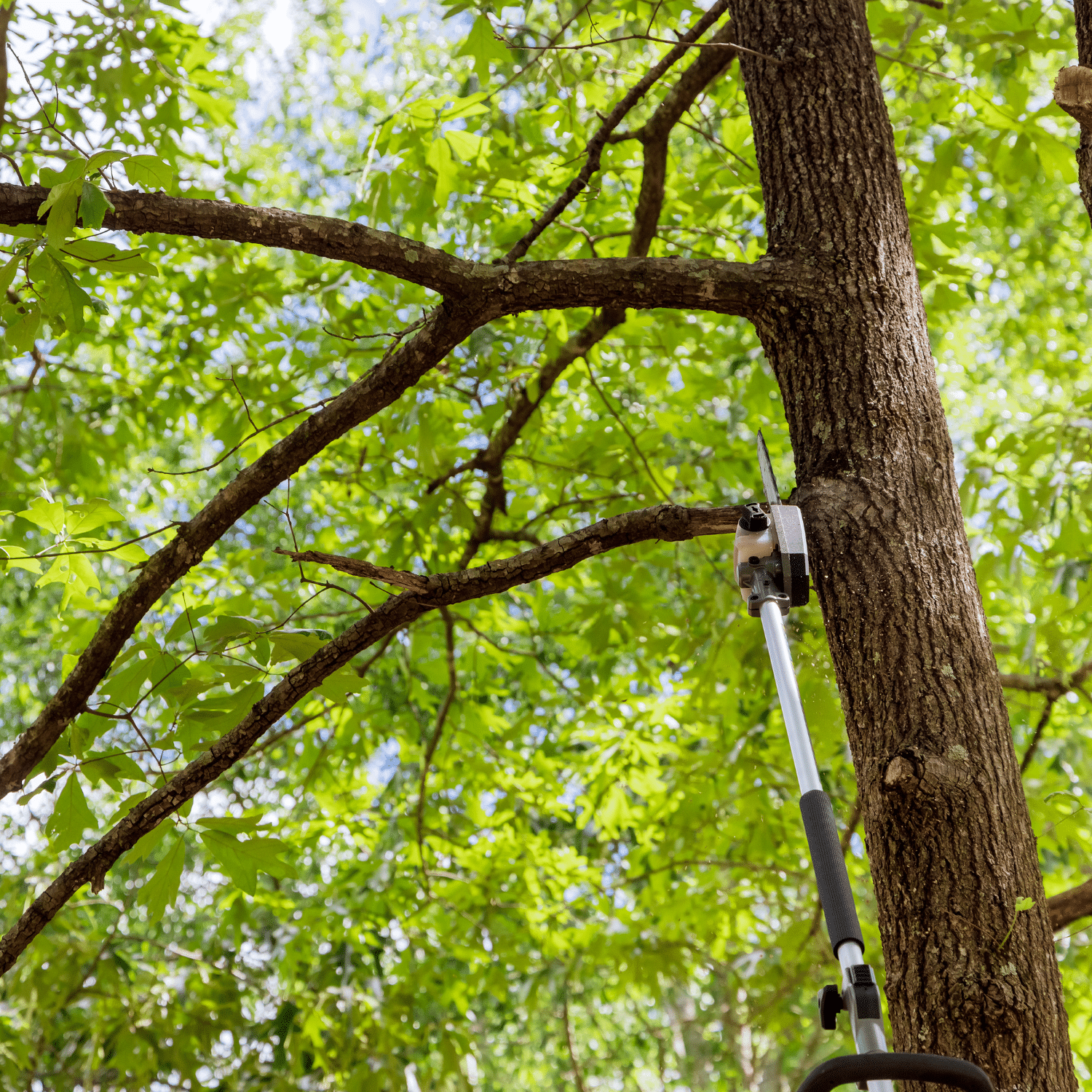
TL:DR Tree trimming in Tampa Bay should happen at least once a year for most species, with the ideal window running November through March. Tampa Bay’s subtropical climate and hurricane season make regular trimming essential — not just for curb appeal, but for storm safety, pest control, and protecting your home. Hire a licensed, insured tree trimming service for any work above 10 feet or near structures.
If you own a home in Tampa Bay, keeping your trees trimmed isn’t optional — it’s one of the highest-impact maintenance decisions you can make for your property. But most homeowners in Lutz, Odessa, Wesley Chapel, and across the greater Tampa area have the same questions: How often should I trim? Is there a wrong time of year? And when does a weekend DIY project become a call to a professional tree trimming contractor?
This guide answers all of it. After five years and thousands of tree trimming jobs across the Tampa Bay area, the team at Canopy Crafters has seen every situation — from overgrown live oaks threatening rooflines to palms that haven’t been touched in years. What follows covers every angle: the difference between trimming and pruning, when and how often to do it in Florida’s climate, what it should cost, species-specific guidance, and how to evaluate a contractor before you sign anything.
Tree Trimming vs. Tree Pruning: What’s the Actual Difference?
What is the difference between tree trimming and tree pruning? Tree trimming cuts back overgrown branches to control size and shape. Tree pruning selectively removes dead, diseased, or structurally weak branches to improve a tree’s long-term health. Most professional jobs involve both.
The two terms get used interchangeably, but they describe different work with different goals.
| Tree Trimming | Tree Pruning | |
| Goal | Aesthetics + size control | Tree health + structural integrity |
| What’s removed | Overgrown or overhanging branches | Dead, diseased, crossing, or structurally weak branches |
| Tools | Hedge shears, loppers, pole saws | Hand pruners, pruning saws |
| Best timing | Year-round in Tampa Bay | Late fall through early spring for hardwoods |
| Who needs it | Most homeowners on a maintenance schedule | Trees with health or structural concerns |
For most residential jobs in Tampa Bay, you need both. A professional tree trimming service shapes the tree while identifying and removing unhealthy growth — the two aren’t separate jobs, they’re done together.
Why Tree Trimming Matters More in Tampa Bay
Tampa Bay’s subtropical climate creates tree care needs that are genuinely different from most of the country. Three factors drive this:
Hurricane and storm safety. Florida homeowners file more tree-related insurance claims than any other state. Overgrown trees with dense canopies act like sails in high winds — catching wind load and dramatically increasing the chance of branch failure or full tree failure. Canopy thinning and deadwood removal before storm season significantly reduce that risk. Pre-hurricane tree trimming in Tampa Bay is one of the most important services we provide each spring.
Year-round growth. Unlike trees in northern states that go dormant in winter, Tampa Bay trees grow almost continuously. Live oaks, sabal palms, and slash pines can add several feet of new growth annually. Without regular trimming, branches quickly encroach on rooflines, gutters, power lines, and neighboring properties.
Pest and disease pressure. Florida’s warm, humid environment is ideal for fungal infections, wood-boring insects, and bacterial diseases that spread through damaged or stressed tree tissue. Regular trimming removes affected limbs before infections spread, improves airflow through the canopy to reduce moisture, and gives a trained eye a regular look at tree health.
Pro Tip: The most expensive tree trimming job is always the one that gets put off. A $350 routine trim can become a $1,800 hazard removal if neglect allows branches to grow over your roof or into power lines.
The 7 Types of Tree Trimming Explained
Not all trimming is the same. The right technique depends on the tree and what you’re trying to accomplish.
- Crown Cleaning — Removing dead, dying, diseased, and broken branches. This is the most common service and the foundation of any professional tree care program.
- Crown Thinning — Selectively removing interior branches to increase light and airflow without reducing overall tree size. Critical for Tampa Bay’s large live oaks, which develop dense canopies vulnerable to wind damage.
- Crown Reduction — Reducing the overall canopy by cutting back to lateral branches. The correct approach when a tree has outgrown its space. This is not “topping” — a harmful practice where branches are cut to stubs.
- Crown Lifting (Canopy Raising) — Removing lower branches to raise the base of the canopy. Done to improve clearance for vehicles, pedestrians, or structures, and to allow light to reach grass underneath.
- Deadwooding — Targeted removal of dead or dying branches, which are both a safety hazard and a disease vector. Essential after Tampa Bay’s storm season.
- Formative (Structural) Pruning — Pruning young trees to establish a strong branch structure early. Trees pruned correctly in youth need far less corrective work as they mature and are significantly more resilient to storm damage.
- Palm Frond Removal — A specialized service for sabal palms, queen palms, and other species common across Tampa Bay. Involves removing dead fronds, seed pods, and boots (old frond bases) using different tools and techniques than standard tree trimming.
Best Time to Trim and How Often: Florida’s Rules
When is the best time to trim trees in Florida? Late fall through early spring — November through March — is the ideal window for most trees in Tampa Bay. Cooler temperatures and slower growth reduce tree stress and minimize disease risk. Dead or hazardous branches should be removed immediately, regardless of season.
Seasonal Guide for Tampa Bay
| Months | Status | Notes |
| Jan–Feb | ✅ Ideal | Dormant hardwoods; best for oaks and maples |
| Mar–Apr | ✅ Good | New growth starting; palm fronds ready to remove |
| May–Jun | ⚠️ Caution | Heat stress risk; trim early morning only |
| Jul–Aug | ⚠️ Caution | Peak hurricane season; storm prep trimming is appropriate |
| Sep–Oct | ✅ Good | Post-summer recovery; remove storm damage |
| Nov–Dec | ✅ Ideal | Coolest months; best structural pruning window |
Storm damage and hazardous limbs require immediate attention regardless of timing. Never delay removing a dangerous branch over seasonal concerns — the risk outweighs any stress to the tree.
A note on oak wilt: While less common in Florida than Texas, it does occur. Avoid heavy pruning of oaks during peak beetle activity months (late spring through summer). If summer pruning is necessary, have a professional seal cuts immediately.
Trimming Frequency by Species
How often should trees be trimmed in Tampa Bay? Most trees in Tampa Bay need trimming every one to three years, depending on species and proximity to structures. Live oaks should be trimmed every two to three years; palms one to two times per year; ornamental flowering trees annually after their bloom cycle.
- Live Oak: Every 2–3 years for established trees; annually for younger trees or those near structures.
- Sabal Palm: Once or twice per year to remove dead fronds and seed pods. Do not remove healthy green fronds — this weakens the tree.
- Queen Palm / Royal Palm: Every 6–12 months. Heavy producers of fruit clusters and dead fronds that attract pests if left unmanaged.
- Slash Pine: Every 3–5 years unless showing deadwood or signs of pine beetles or pitch canker disease.
- Crape Myrtle: Annually in late winter. Remove dead wood and crossing branches only — never top a crape myrtle.
- Southern Magnolia: Prune after flowering (late spring to early summer) to preserve the following year’s bloom. Sensitive to over-cutting.
Tampa Bay Tree Species: What Each One Needs
Live Oak (Quercus virginiana)
The defining tree of Tampa Bay neighborhoods, live oaks grow wide — mature specimens can spread 80–100 feet across. They shed leaves in spring (not fall), produce heavy annual catkin drops, and can develop structural problems if co-dominant stems aren’t addressed early. Professional crown thinning and deadwood removal every 2–3 years is the recommended standard from the International Society of Arboriculture.
Sabal Palm (Cabbage Palm)
Florida’s state tree is routinely over-trimmed. The “hurricane cut” — removing almost all fronds to reduce wind resistance — actually weakens palms by eliminating the photosynthetic area they need to sustain themselves. The correct approach is to remove only brown, dead fronds and any fruiting structures. Healthy green fronds should always remain. Our palm trimming approach follows best practice guidelines from the University of Florida’s IFAS Extension program.
Did You Know? A “hurricane cut” doesn’t make palms more storm-resistant — it makes them weaker. Palms trimmed this way are more likely to fail in high winds, not less.
Slash Pine (Pinus elliottii)
Generally low-maintenance, but the main concerns are lower limb removal for clearance and annual monitoring for pine beetles and pitch canker. Pines should never be “lion-tailed” — stripped of interior and lower branches while leaving tufts only at branch tips. This weakens the tree and makes it vulnerable to wind failure.
Crape Myrtle (Lagerstroemia spp.)
One of Tampa Bay’s most beloved flowering trees — and one of the most abused. “Crape murder” (topping flush to the trunk each winter) is widespread in Florida and produces knobby, weakened growth year after year. The correct trim removes only dead wood, crossing branches, and suckers. Trees trimmed correctly bloom significantly more than topped ones.
DIY vs. Hiring a Professional Tree Trimming Service
When should you hire a professional tree trimming service? Hire a licensed professional for any work requiring a ladder or climbing equipment, work near power lines, branches thicker than three inches in diameter, and trees showing signs of disease or storm damage. DIY is reasonable only for small trees under ten feet with easily accessible low branches.
When DIY Is Appropriate
- Small ornamental trees or shrubs under 10 feet tall
- Removing branches under 2 inches in diameter from ground level
- You have proper tools: bypass pruners, loppers, a hand saw, and eye protection
When to Always Call a Professional
- Any work requiring a ladder or climbing — falls from trees are a leading cause of serious homeowner injuries in Florida
- Branches near power lines — Florida law and most insurance policies require a licensed contractor; never attempt this yourself
- Trees near your roofline, gutters, or foundation
- Trees showing disease, instability, or structural damage
- Any branch thicker than 3–4 inches
- Storm-damaged trees — stressed wood behaves unpredictably when cut
- Any palm tree work — smooth trunks make falls particularly dangerous
Attempting power line work yourself can result in electrocution, fines, and voided homeowner’s insurance coverage.
What to Look for When Hiring a Tree Trimming Contractor
- Licensed and insured in Florida — always ask for proof
- Carries at minimum $1 million in general liability insurance
- Provides a written estimate before work starts
- Does not require full payment upfront
- Does not recommend “topping” — a clear red flag for an unqualified contractor
- Uses ISA pruning standards and proper climbing and rigging techniques
What Does a Tree Trimming Service Cost in Tampa Bay? (2026)
How much does tree trimming cost in Tampa Bay? Tree trimming in Tampa Bay typically ranges from $150 for small ornamental trees to $2,500 or more for large specimen oaks. The average homeowner pays between $350 and $900 per tree, depending on size, species, and accessibility.
| Tree Type / Size | Low Estimate | High Estimate | Notes |
| Small tree (under 25 ft) | $150 | $400 | Ornamentals, young oaks, crape myrtles |
| Medium tree (25–50 ft) | $350 | $750 | Mature crape myrtles, mid-sized oaks |
| Large tree (50–80 ft) | $700 | $1,400 | Large live oaks, slash pines, magnolias |
| Very large tree (80 ft+) | $1,200 | $2,500+ | Specimen oaks, large canopy trees |
| Palm tree trimming | $100 | $350/palm | Lower for accessible palms; higher for tall queens |
| Multi-tree discount | 10–20% savings | Most companies discount when trimming 3+ trees |
Pricing varies based on site conditions, access, and debris removal. The best way to get an accurate number is to request a free written estimate — always get this before any work begins.
Signs Your Tree Needs Trimming Right Now
Some warning signs are obvious. Others are easy to miss until they become emergencies.
- Dead or hanging branches — Any branch that is dead, cracked, or hanging at an angle is a hazard. In Tampa Bay, where afternoon thunderstorms develop fast and without warning, these need to go immediately.
- Branches touching or overhanging your roof — Contact with your roof causes shingle damage, creates entry points for pests, and significantly raises risk during high winds.
- Dense canopy blocking light — A canopy so thick that little sunlight reaches the ground below is a sign a tree needs thinning. Dense canopies are also far more vulnerable to wind damage.
- Branches within 10 feet of power lines — Contact a licensed tree trimming contractor immediately. Do not wait.
- Crossing or rubbing branches — Open wounds from friction invite disease and insect infestation.
- Sudden or increasing lean — Especially after a storm, a new lean can indicate root failure and requires immediate professional evaluation.
- No trimming in 3+ years — If you can’t remember the last service date, schedule an assessment.
Ready to Schedule Your Tree Trimming Service in Tampa Bay?
Canopy Crafters has been serving homeowners and businesses across Lutz, Odessa, Carrollwood, Tampa, Wesley Chapel, and Land O’ Lakes since 2020. Our fully licensed and insured team brings professional-grade equipment and genuine tree knowledge to every job — whether you need a single palm trimmed or a full property maintenance program.
Every job starts with a free estimate and a walkthrough of what your trees actually need. No upselling. No surprise fees.
Get your free tree trimming estimate — call 813-863-1769
Serving Lutz · Odessa · Carrollwood · Tampa · Wesley Chapel · Land O’ Lakes · Brandon · New Tampa
Frequently Asked Questions About Tree Trimming in Tampa Bay
When is the best time to trim trees in Florida? November through March is the ideal window — cooler temperatures and slower growth reduce tree stress and minimize disease risk through open pruning wounds. Dead, hazardous, or storm-damaged branches should be removed immediately, regardless of season.
How often should trees be trimmed in Tampa Bay? Most Tampa Bay trees benefit from trimming every one to three years depending on species and growth rate. Live oaks generally need attention every two to three years; palms one to two times per year; faster-growing ornamental trees may need annual trimming.
Is tree trimming required by law in Florida? Florida has no statewide mandatory trimming law, but many municipalities in Hillsborough County require property owners to maintain trees that create hazards on public property, block signage, or interfere with utility lines. HOAs in the Tampa Bay area frequently have additional maintenance requirements.
What is the difference between tree trimming and tree removal? Tree trimming is the selective cutting of branches from a living tree to manage size, shape, or health. Tree removal is the complete extraction of a tree from the property. Trimming is appropriate when a tree is healthy and manageable in place; removal is considered when a tree is dead, severely diseased, structurally compromised, or poses an unacceptable risk. Learn more about our tree removal service in Tampa Bay.